
Introduction
Chlorine is universally accepted for combating slime and algae better than any other chemical. The most important aspect of chlorine usage its economy and effectiveness in killing bio-organisms. Other uses of chlorine include control of H2S and Odor, fly control, sludge bulking and foaming control, ammonia oxidation, BOD reduction, disinfection, bleaching etc.
Chlorinator is a device to provide a continuous and constant supply of metered chlorine in the safest possible manner. Chlorinators find application in Drinking Water Treatment, Cooling Water Treatment, Waste Water Treatment, Bleaching, Pharmaceutical formulations and other industrial applications. Depending upon the mode of operation Gas Chlorinators are a classified into two types namely Vacuum-Feed Gas Chlorinator and Gravity Feed Gas Chlorinator.
The Industries that benefit includes Chemicals and Fertilizers, Rafineries, Petrochemicals, Power Stations, Steel Plants, Cement Plants, Pharmaceuticals Industries, Pesticide Industries, Food Industries, Textiles, Paper and Pulp Industries. Sugar Plants, Municipalities. Corporations. Townships, Water Boards Theme Parks, Hotels, Apartment Complexes, Aquaculture Units etc.
We market a wide range of chlorinating equipment and related accessories to cater to this requirement.
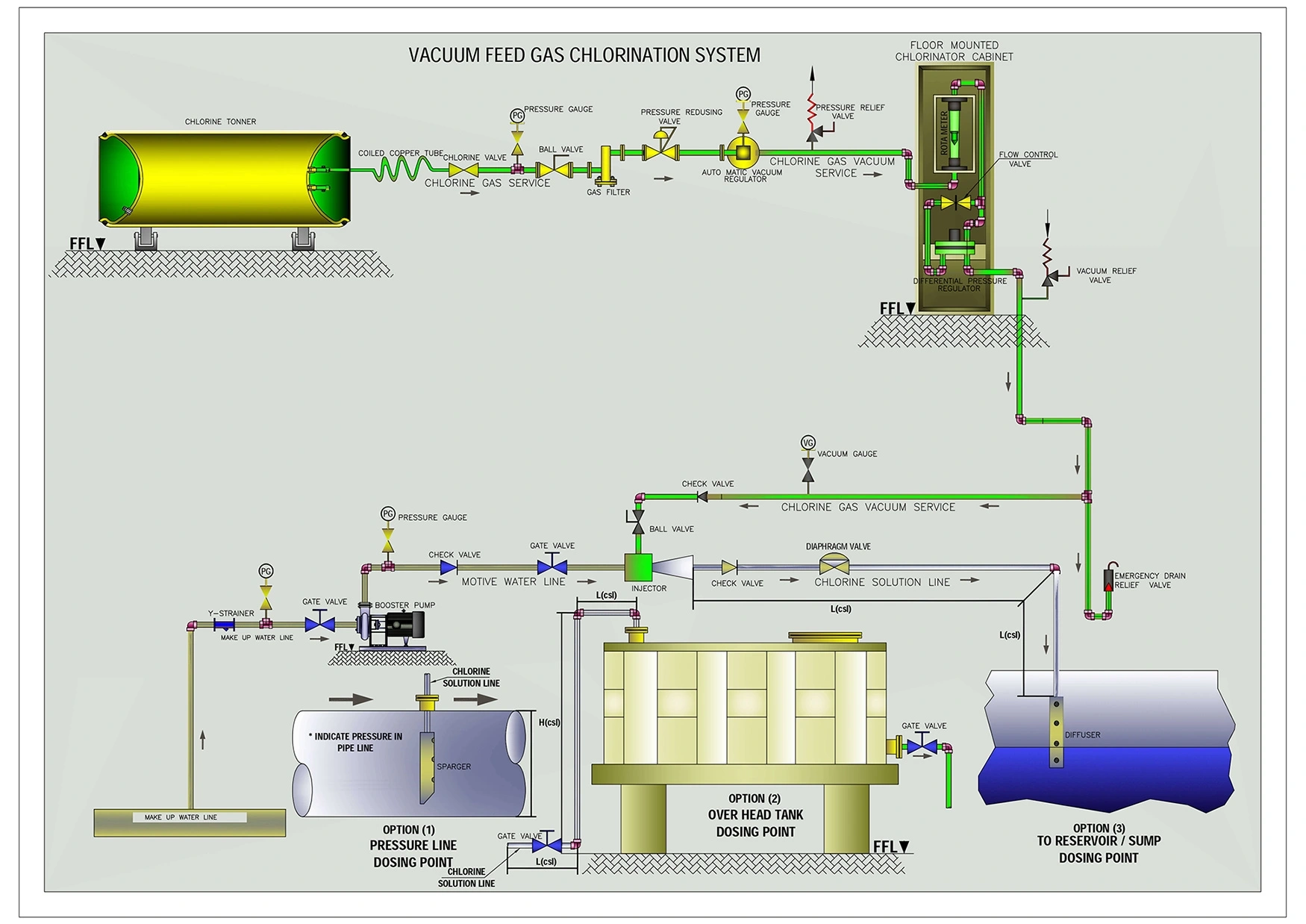
Motive Water (water at high pressure) passes through the Injector to produce vacuum. This vacuum extends upto Automatic Vacuum Regulator (AVR). The chlorine gas supplied (from Tonners / Cylinders or Chlorine Evaporators) under pressure is reduced to a lower pressure by Pressure Reducing Valve (PRV) and to a constant vacuum at the AVR. The gas under vacuum passes through a Gas Flowmeter or Rotameter and Flow Control Valve (FCV). A Differential Pressure Regulator (DPR) is provided for Chlorinators above Kgs/hr capacity, to control the pressure drop across the Flow meter and also to ensure accurate and steady flow of gas. The chlorine gas then gets mixed with the water at the injector and is then discharged to the point of application. Safety Valves like Emergency Check Valve, Emergency Drain Valve, Pressure Relief Valve and Vacuum Relief Valve are provided in this System to make it safe for both Operating Personnel and Equipment's longevity.
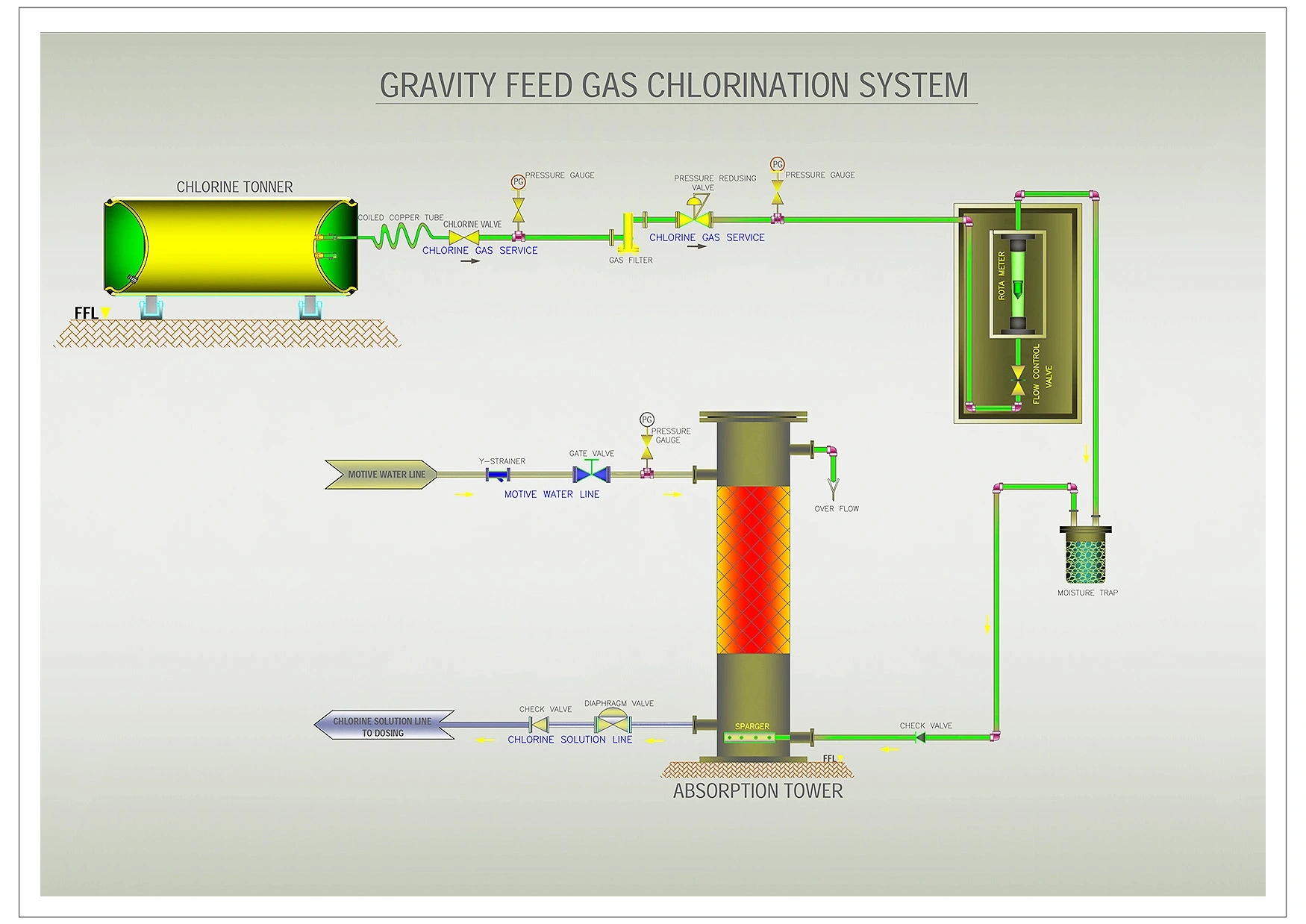
Chlorine Gas from Cylinders/Tonners at regulated pressure passes through a Flow Control Valve, Rotameter/Flowmeter, Moisture-Trap and Check Valve to a Packed Absorption Tower where it gets uniformly mixed with the incoming water. The chlorine solution is then discharged to the point of application [normally discharged into a sump or reservoir at an elevation below the Absorption Tower only]. The Flow meter directly indicates the amount of chlorine consumed. It is very important that the required water flow to the Absorption Tower, should be constant and continuous at the time of operation for safety reasons.
The above items are standard for Wall Mounted / Frame Mounted and Floor Mounted Manual Gravity Feed Gas Chlorinators. Supply of Chlorinator accessories shall be supplied on request basis.
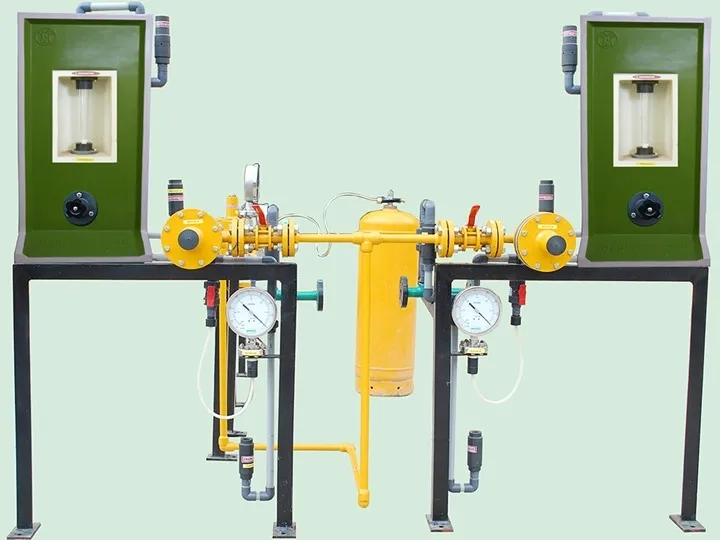
We can design, manufacture, supply, erect, test and commission the entire Chlorination Plant on a Turnkey Basis.
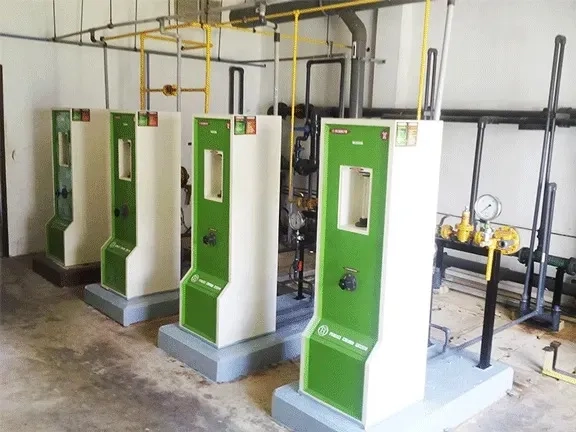
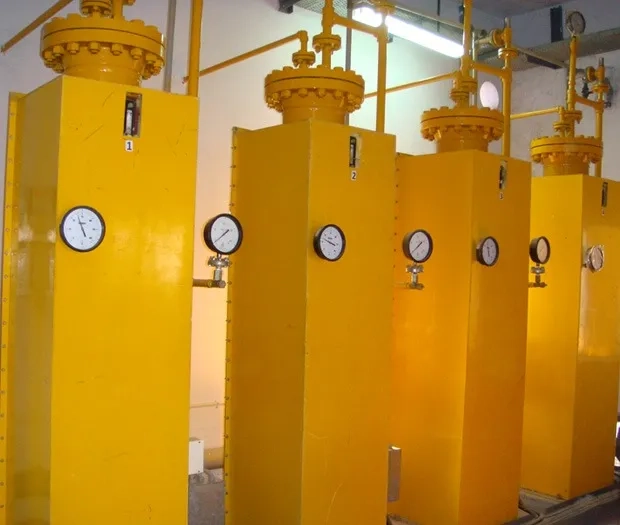
Type and Quantity of Chlorinators Required (Vacuum Feed or Gravity Feed)
Type of Automation required (if required).
Capacity of Chlorinator / Required Free Residual Chlorine (FRC) in ppm / Volume of water / Flow rate of water to be treated.
Back pressure in the Chlorine Solution discharge pipeline / Point of dosing.
Purpose for which this system is to be used: Drinking water / Waste water / Cooling water / Other Special Applications.
.png)

